





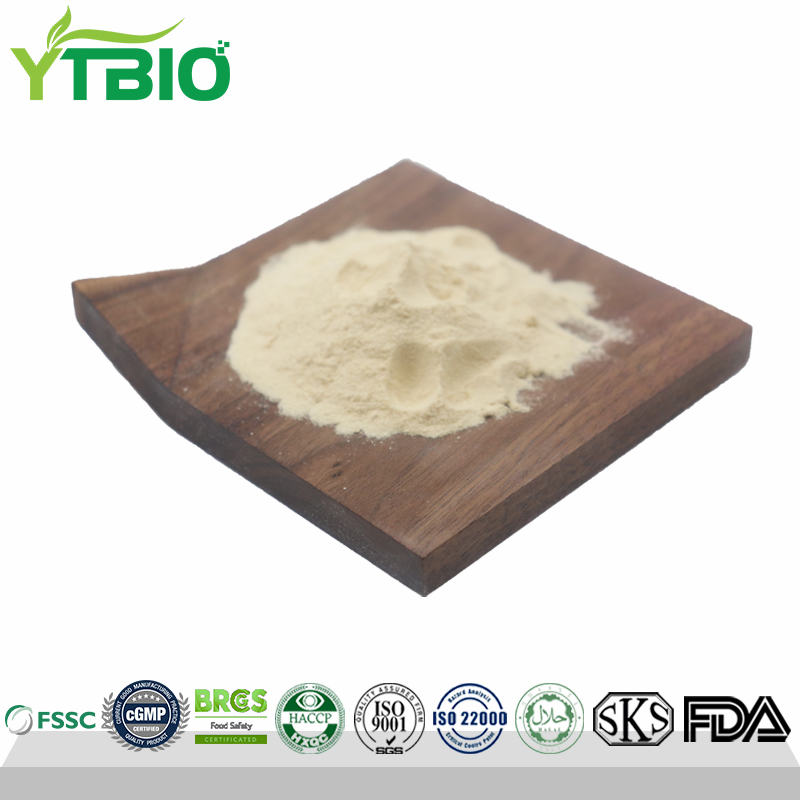
Factory Supply Alkaline Protease Powder
What is Alkaline Protease ?
Alkaline Protease is a bio-enzyme preparation with highly efficient catalytic activity under alkaline conditions. Its main function is to hydrolyze peptide bonds in protein molecules. This enzyme belongs to the serine protease family, and its active site contains characteristic serine residues. It maintains optimal activity under alkaline conditions of pH 8.0-12.0, with an optimal operating temperature typically between 40-60℃. Industrially produced alkaline proteases are mainly derived from microbial systems, particularly strains such as Bacillus subtilis and Bacillus licheniformis, and are produced on a large scale through submerged fermentation technology. Due to its unique catalytic properties, alkaline proteases have demonstrated significant value in multiple industrial sectors: detergents, food processing, and biopharmaceuticals. They also play an irreplaceable role in leather manufacturing and environmental treatment. This multifunctional biocatalyst is driving technological progress in related industries with its high efficiency and environmentally friendly characteristics.
Mechanism of Action of Alkaline Protease
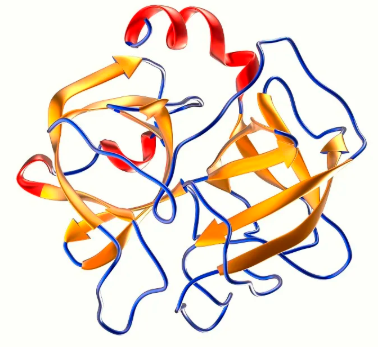
As a highly efficient biocatalyst, the mechanism of action of Protease Alkaline is based on precise molecular recognition and catalytic principles. The active site of this enzyme possesses a unique spatial structure, enabling it to accurately recognize and bind to peptide bonds in protein molecules. In an alkaline environment (optimal pH 9-11), the enzyme molecule reaches its optimal conformation, with the serine residues in the active site forming a highly active "catalytic triplet" structure through the synergistic action of histidine and aspartic acid.
When the enzyme comes into contact with the substrate, it first forms an enzyme-substrate complex with the protein substrate through intermolecular forces. Subsequently, the hydroxyl group of the serine residue initiates a nucleophilic attack on the carbonyl carbon in the peptide bond, forming an unstable transition state intermediate. In this process, histidine acts as a generalized base catalyst, accepting protons and assisting in the peptide bond cleavage reaction.
As an endopeptide, the unique characteristic of alkaline proteases is their ability to cleave proteins from any position within the molecule, a property that significantly distinguishes them from exopeptides that can only hydrolyze from the ends. Within a suitable temperature range (35-45°C), the enzyme molecule maintains sufficient conformational flexibility, ensuring both catalytic efficiency and structural stability.
The specificity of this enzyme lies in its specific recognition of peptide bonds. It can act on a variety of different types of protein substrates without affecting other biomolecules such as starch and fats. After completing one catalytic cycle, the enzyme molecule rapidly releases hydrolysis products, restores its initial conformation, and continues the next round of catalytic reaction. This reusable characteristic, combined with its high catalytic efficiency, makes alkaline protease exhibit significant technological advantages and economic value in industrial applications.
Application Value of Alkaline Protease
Protease Alkaline demonstrates outstanding application value in modern industry. Its unique protein hydrolysis capability has brought technological innovation to multiple industries.
In the detergent industry, this enzyme preparation significantly improves detergency by specifically decomposing protein stains, while reducing the amount of chemical surfactants used, promoting the development of green detergents.
The food processing industry fully utilizes the biocatalytic properties of alkaline protease. In the meat processing industry, precise control of the enzymatic hydrolysis process improves meat texture; in dairy manufacturing, it accelerates cheese ripening and enhances flavor; and in soybean deep processing, it is used to develop high-end raw materials such as functional peptides, effectively increasing product added value.
In the biopharmaceutical field, alkaline proteases are driving technological innovation. These enzymes play a crucial role in protein drug development and provide precise wound cleaning solutions. Their unique bioactivity also opens up potential pathways for novel drug development.
In leather manufacturing, alkaline proteases offer environmentally friendly solutions, replacing traditional chemical treatments with gentle biochemical reactions, significantly reducing environmental pollution while maintaining leather quality.
In the feed industry, the addition of alkaline proteases improves protein utilization, promoting animal growth while reducing nitrogen emissions, thus achieving sustainable development in animal husbandry.
In environmental engineering, Protease Alkaline is used to treat organic waste, converting protein pollutants into usable resources and providing biotechnological solutions for waste management. These cross-disciplinary applications fully demonstrate the important role of alkaline proteases as biocatalysts in modern industrial systems.

