
How Does Zinc Pyrithione Achieve Dandruff Removal? Core Mechanism of Action and Scientific Basis
In the field of scalp health care, Zinc Pyrithione Achieve, due to its stable, highly effective, and well-defined mechanism, has long been considered one of the core active ingredients in anti-dandruff formulations. It has not only been widely verified to significantly improve dandruff problems, but also maintains an important application position in many markets thanks to its profound scientific accumulation and mature processing system.
So, how exactly does ZPT exert its anti-dandruff effect at the molecular and cellular levels? What are its scientific basis and key formulation points?
I. Causes of Dandruff: Malassezia and Microecological Imbalance
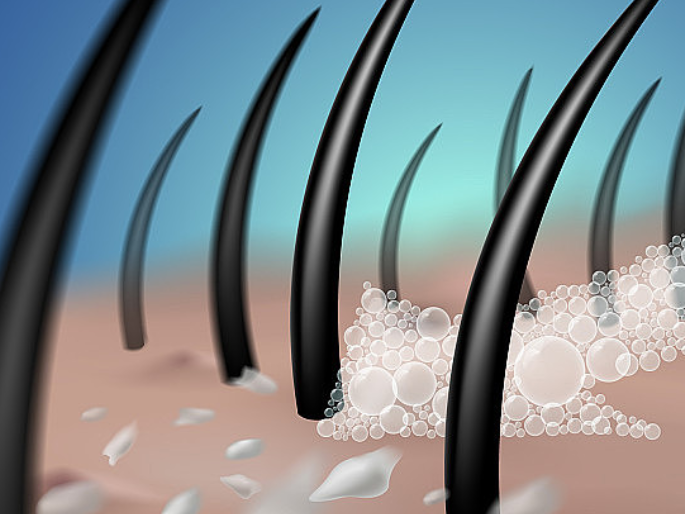
Modern research has clearly shown that dandruff is not simply an accelerated shedding of keratinocytes, but rather a series of chain reactions triggered by an imbalance in the scalp's microecology. Among these, the excessive proliferation of Malassezia is a key driving factor:
In over 90% of dandruff cases, a significant increase in the number of Malassezia on the scalp surface can be observed;
This fungus uses sebum as a nutrient source, and its metabolites (such as unsaturated fatty acids) irritate the scalp, leading to abnormal keratinocyte renewal cycles, causing inflammation and visible dandruff. Therefore, effective dandruff control strategies must precisely target Malassezia to restore the balance of the scalp microbiota.
II. Mechanism of Action of ZPT: Multi-Pathway Synergistic Inhibition
The dandruff-controlling efficacy of ZPT stems from its multi-target, synergistic effects, primarily encompassing the following three levels:
Disrupting Fungal Cell Structure and Function
The zinc-pyridinethione complex in ZPT can interfere with the integrity of the Malassezia cell membrane, affecting its ion channel and enzyme system functions, thereby inhibiting normal fungal growth and colonization.
Interfering with Energy Metabolism and Inhibiting Microbial Activity
After entering the cell, ZPT can further affect the mitochondrial function and respiratory chain reaction of the fungus, blocking its energy production, leading to metabolic stagnation and proliferation inhibition, achieving long-lasting dandruff control.
Regulating Inflammatory Response and Alleviating Scalp Discomfort
Studies show that ZPT has a certain regulatory effect on inflammatory signaling pathways such as NF-κB, helping to reduce the expression levels of related cytokines (such as IL-1 and TNF-α), thereby alleviating discomfort symptoms such as scalp redness and itching, achieving a dual improvement of "antibacterial + soothing".
III. Scientific Basis
After decades of research and market validation, ZPT possesses a solid foundation of clinical evidence. Multiple randomized controlled trials have shown that:
Using shampoos containing 0.5%–1% ZPT can reduce dandruff by 40%–60% within 2–6 weeks;
The inhibition rate against Malassezia can reach over 90% in some experiments;
Continuous use for 4 weeks can significantly improve scalp itching and erythema.
These data collectively support the long-term and widespread application of ZPT in the field of dandruff control.
IV. ZPT's Industry Position: Why Has It Become a Classic Choice?
Beyond its well-defined mechanism and efficacy, ZPT's long-standing status as an industry-standard ingredient stems from the following combined advantages:
Excellent stability: Chemically stable in common surfactant systems (such as SLES/CAPB), facilitating formulation;
Wide compatibility: Highly compatible with various emulsion systems and conditioning ingredients, suitable for developing products with different target markets;
High cost-effectiveness: Offers cost advantages for large-scale production while maintaining efficacy;
Fast onset and long-lasting effect: Most users experience noticeable improvement in a short period, with long-term use maintaining good results.
These characteristics have enabled ZPT to maintain a significant position in the global anti-dandruff product market despite numerous regulatory and market changes.
V. Key Points for Formulation Application: How to Achieve Optimal Efficacy
From raw material selection to finished product development, the following points are crucial for achieving the best results with ZPT:
Raw Material Quality: High-purity ZPT with a suitable particle size (micron-level) exhibits better dispersibility, contributing to stable distribution in the system and improving bioavailability;
System Compatibility: It is recommended to use within a pH range of 5-7, and pay attention to compatibility with suspending agents and thickeners to prevent sedimentation;
Synergistic Effects: It can be combined with ingredients such as pyridone ethanolamine salt and glycerin to further enhance antibacterial or moisturizing and repairing effects;
Process Control: Homogenization processes and temperature management affect the final dispersion state and product stability of ZPT.
As a professional raw material partner, YTBIO is committed to providing customers with high-purity, high-stability zinc pyrithione raw materials, suitable for:
- Anti-dandruff shampoos and scalp care products
- Shower gels and body washes
- Other functional materials requiring antibacterial and antifungal properties

We adhere to strict quality control and batch consistency, and provide corresponding technical documentation and application support to help you develop efficient, stable, and compliant anti-dandruff products.
For detailed specifications, COAs, samples, or further technical consultation, please feel free to contact us: sales@sxytbio.com