

Sodium alginate: a natural regulator of glucose and lipid metabolism
Are you still worried about the "high blood sugar" or "abnormal blood lipids" markings on your medical examination report? Are you stuck on the difficult road to weight loss, watching helplessly as fatty liver quietly creeps up on you?Why not try sodium alginate, which can help you gently regulate metabolism and stabilize blood lipids and blood sugar through your daily diet?
I. What is it?
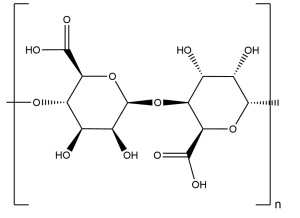
Sodium alginate is a natural polysaccharide extracted from brown algae such as kelp and giant kelp. It possesses unique gelling, thickening, and biocompatibility properties. For a long time, it has been widely used in the food industry, often as a stabilizer in foods such as ice cream and jelly. In recent years, its potential value in metabolic regulation has been gradually discovered.
II. Our advantages in YTbio
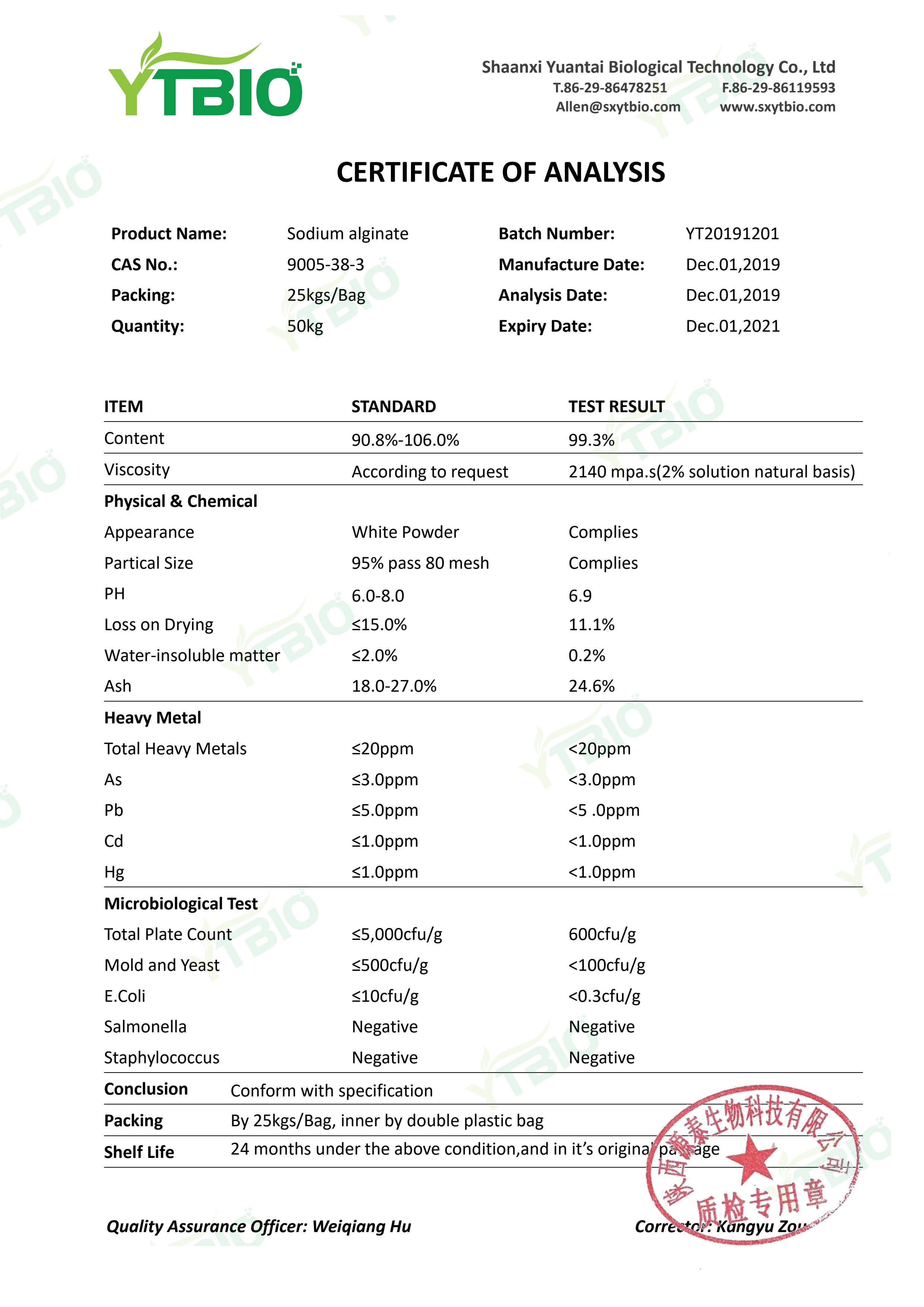
Shaanxi YTBIO Biotechnology Co., Ltd. is a professional supplier of sodium alginate integrating production and sales. We strictly adhere to a standardized quality control system and possess authoritative certifications including HACCP, ISO9001, ISO22000, HALAL, KOSHER, FDA, EU, and NOP organic certifications. With extensive export experience, our products are sold to Europe, America, Southeast Asia, and South Korea. We supply high-quality, batch-stable sodium alginate with ample inventory and stable supply, and can customize specifications according to customer needs.
A recent study published in the *Journal of Food Safety and Quality Testing* has brought new hope: sodium alginate, extracted from seaweed, can significantly improve glucose and lipid metabolism disorders caused by a high-fat diet, with effects even exceeding those of commonly used chitosan.
Related research results show that sodium alginate has multiple positive effects on metabolic regulation: it binds to organic matter, lowers cholesterol in serum and liver, inhibits the rise in total fat and total fatty acid concentrations, improves the digestion and absorption of nutrients, and reduces the body's absorption of these substances; it also slows gastric emptying, increases satiety, and controls weight; simultaneously, it regulates the gut microbiota, improves systemic inflammation, and alleviates insulin resistance.
1. Weight Control: Experimental data showed that after 16 weeks of feeding high-fat mice with chitosan, sodium alginate, or a 1:1 mixture of both at a dose of 100 mg/kg/day, the weight gain rate of the high-fat mice was as high as 107.26%, significantly higher than that of mice on a normal diet. In contrast, the weight gain rate in the sodium alginate group was only 50.23%, and in the chitosan group it was 67.51%, both significantly lower than in the high-fat mice. Sodium alginate showed better weight control than chitosan. The combined weight gain rate of sodium alginate and chitosan was the lowest at 48.53%, indicating the best weight control effect. In simple terms, sodium alginate acts like a "calorie interceptor," effectively blocking fat accumulation caused by a high-fat diet, and its weight control effect is even more pronounced when used in combination with chitosan.
| Table 1 Effects of CTS and SA on the body weight of mice fed a high-fat diet (n=12) | |||||
| Group | Gavage Concentration/(mg/kg) | Body Weight/g - Initial | Body Weight/g - Final | Body Weight Gain/g | Body Weight Growth Rate/% |
| NF | 100 | 36.71±1.28 | 52.35±2.24 | 15.64±2.09 | 42.69±5.94 |
| HF | 100 | 36.54±1.24 | 75.71±6.84* | 39.17±6.58* | 107.26±18.15* |
| HF+CTS | 100 | 36.53±1.43 | 59.15±5.36*# | 22.62±5.09*# | 67.51±16.42*# |
| HF+SA | 100 | 36.66±1.11 | 55.04±2.79# | 18.39±2.69# | 50.23±7.71#△ |
| HF+CTS+SA | 100 | 36.17±1.07 | 53.71±3.56#△ | 17.55±3.28#△ | 48.53±9.03#△ |
| Note: * indicates a significant difference compared with the NF group (P<0.05); # indicates a significant difference compared with the HF group (P<0.05); △ indicates a significant difference compared with the HF+CTS group (P<0.05). The same applies to the tables below. | |||||
2. Blood Glucose: Stable Blood Sugar Reduction: After 16 weeks of feeding, fasting blood glucose levels in high-fat mice increased significantly, while the increase in blood glucose was significantly smaller in the sodium alginate group and the combined group. Further results from oral glucose tolerance tests (OGTT) and insulin tolerance tests (ITT) showed that both sodium alginate and chitosan could improve glucose intolerance and decreased insulin regulation caused by a high-fat diet, and the combined intervention group was more effective than the single intervention group. In simpler terms, sodium alginate can help the body utilize blood glucose more efficiently, reduce the burden on the pancreas, and to some extent delay or prevent the onset of type 2 diabetes.

3. Liver: Reduces oxidative stress and inhibits fat accumulation. A high-fat diet leads to increased malondialdehyde (MDA, a lipid peroxidation product) in the liver, while decreasing the activity of antioxidant enzymes such as superoxide dismutase (SOD) and catalase (CAT).
Studies have found that both sodium alginate and chitosan can significantly reduce liver MDA content and increase SOD activity (P<0.05); the combined group was generally superior to the single group in reducing MDA and improving antioxidant capacity.
Liver pathological sections (HE staining) showed that hepatocytes in the high-fat feeding group exhibited numerous fat vacuoles and ballooning degeneration (typical manifestations of fatty liver); hepatocyte steatosis was significantly reduced in the sodium alginate group and the combined group, and sodium alginate alone was more effective than chitosan.
Sodium alginate not only "reduces fat" but also protects the liver from oxidative damage, preventing fatty liver.
Researchers pointed out that sodium alginate, with its stronger water solubility and hydrophilicity, can more fully bind with lipids in the intestine to form a gel-like substance, thereby reducing the absorption of fat and cholesterol. In addition, it may also exert better metabolic regulatory effects by regulating gut microbiota and activating specific metabolic pathways such as AMPK.
III.YTBIO's Sodium Slginate
In both raw material selection and product development, stable supply and quality are equally crucial.
YTBIO has:
- Own factory: ensuring consistent quality across batches
- Process support: spray drying & freeze drying
- Testing system: meeting international quality standards
- Customization services: OEM / ODM / formulation support
Whether developing sleep aids, sports nutrition products, or antioxidant support products, YTBIO can provide you with professional one-stop solutions.
If you are interested in our products, please feel free to contact us via online inquiry or email. We will provide you with professional service.
Email: sales@sxytbio.com
WhatsApp/phone: +86 17782577059